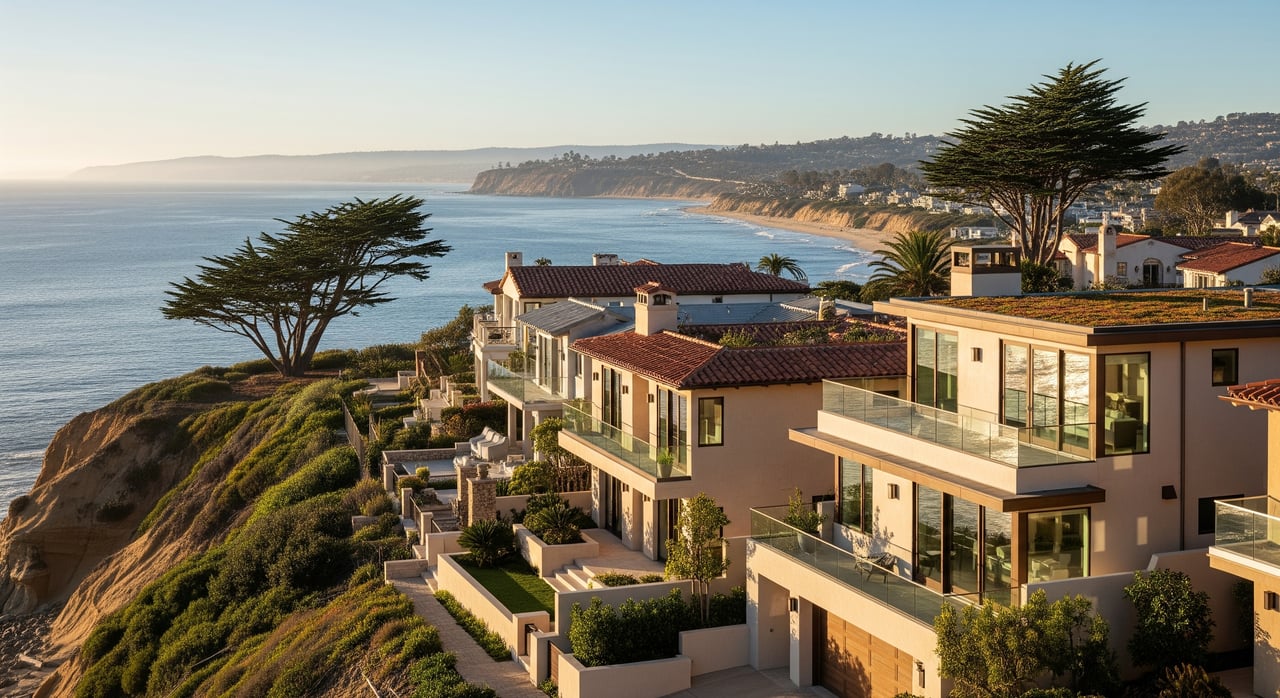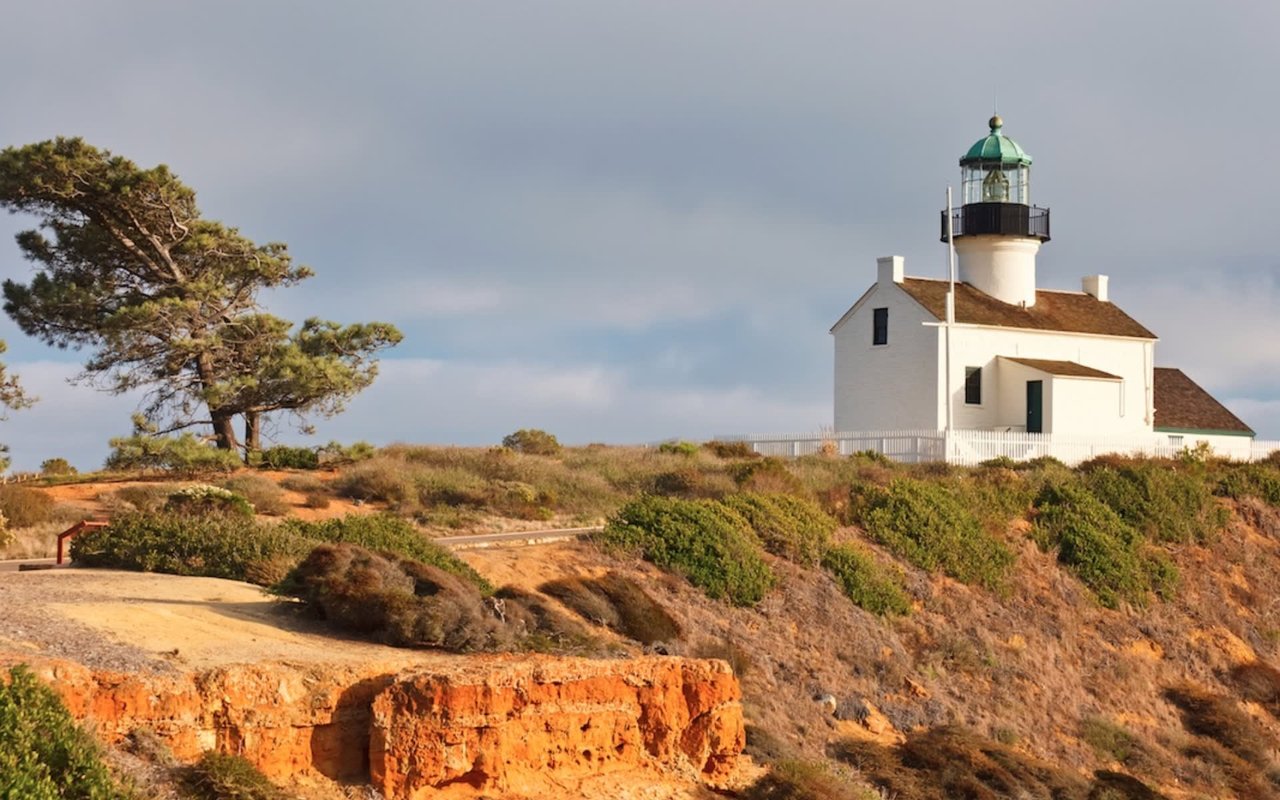
Drive down Torrey Pines Road toward the Village and, just past Prospect Place, you pass a gray concrete K-rail. It went up in early 2018 as a stopgap. That January, a car left the road, went down the hillside and landed in the yard of a home on Coast Walk. The concrete barrier was installed soon afterward as a temporary protective measure, according to the La Jolla Light's reporting in the San Diego Union-Tribune. That temporary barrier has now stood for more than eight years.
Its replacement is finally on the calendar, and the city has planned the work so that most people who use Torrey Pines Road during the day will hardly notice it. That choice has a price. It lands on the hours after dark, on the cyclists who use the bike lane on the construction side, and on Coast Walk, the short dead-end street directly under the work zone.
What Goes In Where the Concrete Comes Out
The City of San Diego's project fact sheet puts the project on the north side of Torrey Pines Road between Prospect Place and Coast Walk. The scope covers about 420 feet of bridge rail with end blocks and crash cushions, plus a new sidewalk, curb and gutter, relocated utilities, fresh paving, restriping and signage.
The rail is an ST-75 bridge rail, 42 inches tall and made of galvanized steel. It is see-through and designed to be sturdier than the K-rail, the Union-Tribune reported in February. According to La Jolla's local news site lajolla.ca, this type of rail is used on freeways and will carry a bike rail along the top. So a solid concrete wall gives way to a rail you can see through, on one of the most-driven approaches to the Village.
San Diego-based Palm Engineering is the contractor. The city lists a $3.04 million budget covering planning, design and construction. City bid documents set Palm Engineering's base-bid construction contract at $1,313,226, and the project is partly funded by the California Department of Transportation. The base-bid construction contract is less than half of the total project budget.
Why Eight Years Became the Baseline
The schedule slipped many times, and most of the slips came with a stated reason:
- January 2018. The crash on Coast Walk. The K-rail goes in soon after as a stopgap.
- About a year later. Work begins on finding a permanent solution.
- Early 2023. Preliminary engineering. The design phase closes in 2026.
- Original plan. Start in winter 2025 and finish by summer 2026. The city later moved that back after adding pothole work to confirm where underground utilities run.
- November 2025. At the La Jolla Traffic & Transportation Board, chair Erik Gantzel says geotechnical evaluations have pushed a planned first-quarter 2026 start to summer 2026.
- August 2026. Palm Engineering's contract begins August 3, but the contractor is still preparing preconstruction documents.
- September 24, 2026. City spokesperson Tyler Becker gives Tuesday, Oct. 6, as the start date. It is the first firm date the city has offered.
- October 6, 2026. The La Jolla Shores Association posts that the start has been pushed to on or about Oct. 12, with work continuing until March 2027.
The city's own wording leaves room for more change. Becker said the March 2027 finish holds barring unforeseen weather or delays in getting materials. The fact sheet describes the schedule as Fall 2026 through Spring 2027, subject to change. A winter of rain could stretch it.
The Day Shift That Isn't
Under the city-approved traffic control plan, crews work from 7 p.m. to 3 a.m., Sunday through Thursday. During some of that night work, the northern westbound lane of Torrey Pines Road closes. In the daytime the road is cleared for traffic, and materials sit in a staging area nearby. As of late September, the city had not decided where that staging area would be.
Friday and Saturday nights fall outside the work window. A Saturday dinner in the Village or a Friday drive home from the Shores should not run into the closure.
"Cleared by day" still comes with caveats. The Shores Association notice warns that the turn lane, sidewalks and bike lanes will also be affected during daytime hours at times. Here is how the plan breaks down by type of trip:
| If you travel Torrey Pines Road by | Planned impact | When |
|---|---|---|
| Car, heading toward the Village | Northern westbound lane closed during some night work | 7 p.m.–3 a.m., Sun–Thu |
| Car, during the day | Road cleared for traffic, turn lane affected at times | Daytime, periodically |
| Bike, on the construction side | Northbound bike lane closed | For the entire project |
| Foot, on the north sidewalk | Rerouted to a protected path on the south side once the sidewalk closes | Around the clock while the detour is in place |
Walkers Get a New Temporary Barrier
Once the north sidewalk closes, pedestrians will be routed to the south side of Torrey Pines Road, onto a path protected by a temporary K-rail. That is the same type of barrier the project is replacing on the north side. Becker said the path will stay open 24 hours a day, seven days a week during construction, with crossings at:
- Prospect Place, the closest crossing at the Village end
- The mid-block crosswalk between Amalfi Street and Princess Street, the closest crossing at the Shores end
Becker said the south-side barrier will come out "upon project completion or when safe to do so." In the version of the plan discussed in February, the protected path also required closing the eastbound bike lane and installing a water-filled barrier where the sidewalk ends, down the hill.
Coast Walk Carries the Night
A plan built to protect daytime traffic sends its costs to the people who live closest to the work. On Coast Walk, that is literal. The Union-Tribune's February coverage describes it as a dead-end residential street with no direct access to the Village. Residents there worry that a slower Torrey Pines Road will send drivers onto their street looking for a way around, even with a sign saying it is not a through street.
At the Traffic & Transportation Board's Feb. 17 meeting, Coast Walk residents asked for three things: sound barriers to shield homes from construction noise, pothole repairs ahead of possible extra traffic, and different work hours. At the time, the plan called for work from 9 p.m. to 5 a.m. on weekdays, and one resident proposed 6 p.m. to 2 a.m. instead.
Gantzel said then that changes seemed unlikely "unless there's something the city agrees is wrong or highly inadvisable." Resident Kathleen Neil and Gantzel planned to send the city two requests: about an extra foot of space behind the water-filled barrier for pedestrians, and moving a "Bike lane closed" sign to Prospect Place where drivers and cyclists could see it more easily.
The approved hours ended up at 7 p.m. to 3 a.m. That is still overnight work, but it ends two hours earlier than the February draft and sits between the draft and the resident's suggested window. The city also promised a flyer, and Becker said it would go to nearby homeowners a week before construction started. In February, Neil said the community would help distribute it so drivers knew what was coming.
Torrey Pines Road near Coast Walk is in the news for another reason this fall too. The La Jolla Parks & Beaches board voted unanimously in October to support a letter about plantings in a public easement above Charlotte Park, between Coast Walk and Princess Street, as the Union-Tribune reported. That is a separate issue from the guardrail, but it involves the same short stretch of road, and the attention on it is about open views.
Who to Contact
The city's resident engineer on the project is Karlene Akers, at [email protected]. General questions go to [email protected]. The La Jolla Shores Association's news page posted the October schedule change, so it is a good place to check for further updates. If the schedule holds, the concrete that has lined the hillside since 2018 will be replaced by a see-through steel rail sometime next spring.
If you own a home near Prospect Place or along Coast Walk and wonder how months of night work and a moving finish date might affect when you list, or how a buyer will view the street once the new rail is in, The Kaiser Team would be glad to walk that stretch with you and talk through it. Book a consultation whenever you're ready.