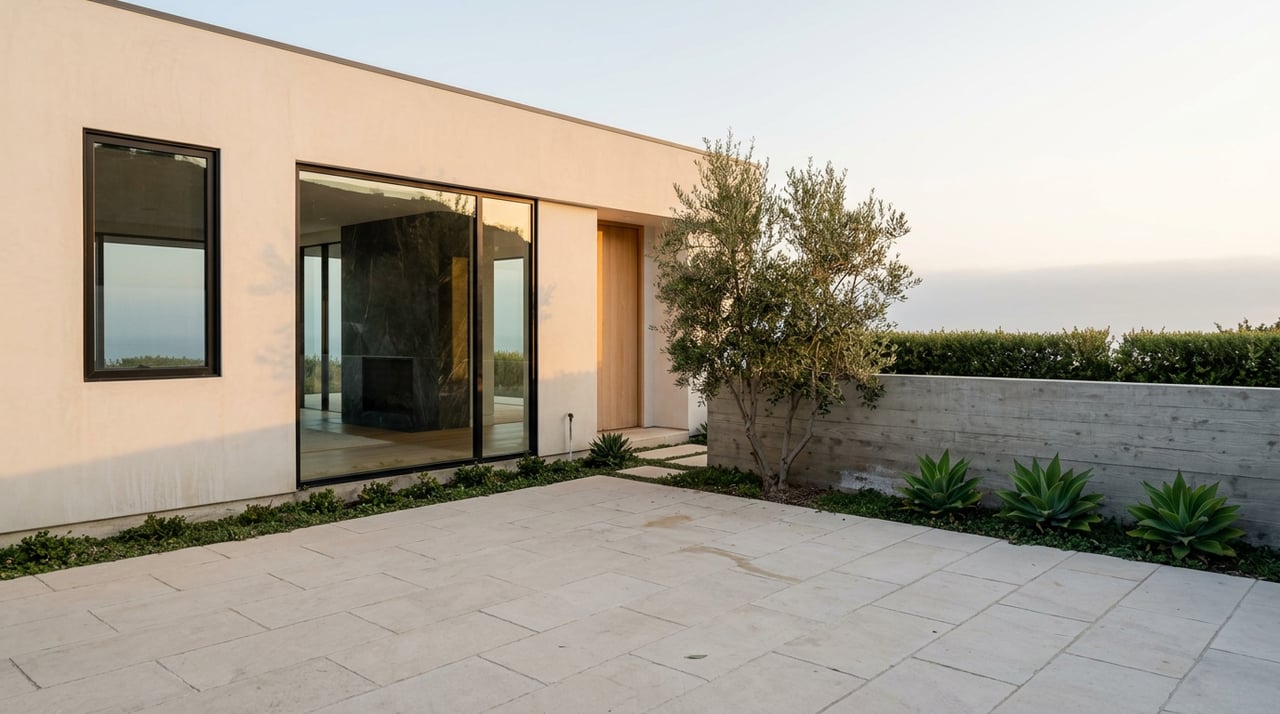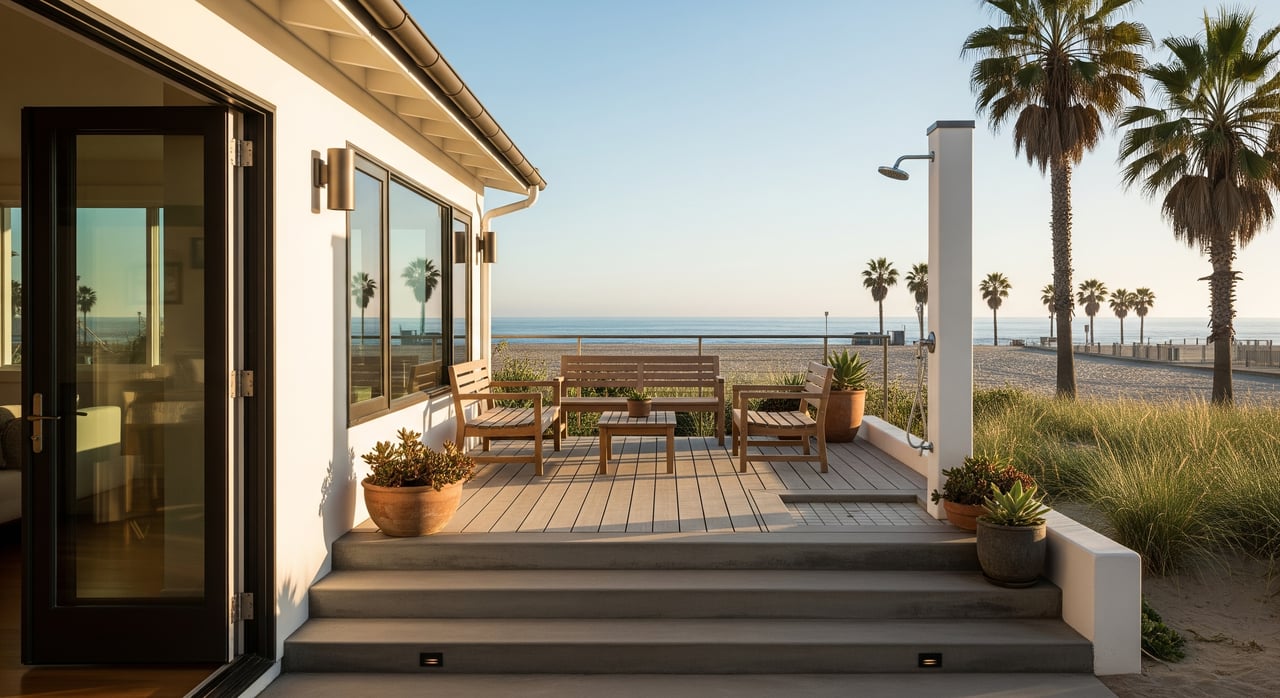
Picture the listing. A Mission Beach cottage two blocks from the boardwalk, photos staged with beach cruisers and a stack of towels by the door, the description leading with a number: $140,000 in annual rental income, occupancy in the high 80s, five-star reviews going back years. It reads like a business you can step into on closing day.
You can't.
That income is attached to a license, and West Coast Homestays explains that in San Diego, short-term rental licenses stay with the person who holds them, not the address. When the sale closes, the seller's Tier 4 license does not transfer, does not convey, and does not come along for the ride no matter what the listing implies. If you're buying that property expecting to plug in and start collecting the same revenue, you're buying a house that used to make that money for someone else.
The rule that catches buyers off guard
San Diego runs its short-term rental program through the Short-Term Residential Occupancy ordinance, and Mission Beach sits in its own category: Tier 4, reserved for whole-home rentals inside the Mission Beach Community Planning Area. The city caps Tier 4 at roughly 30 percent of the neighborhood's housing stock, somewhere between 1,086 and 1,097 licenses depending on how the underlying housing count is measured. By mid-2026, that cap had been fully reached. Every one of those licenses is already spoken for.
Here's the part that matters at the closing table. STRO licenses in San Diego, across every tier, are non-transferable between owners and non-transferable between properties. A Tier 4 license belongs to the host who applied for it, not the parcel it operates on. When that owner sells, the license doesn't sell with the house. It simply ends, or the seller lets it lapse.
The city's own STRO page confirms the mechanics plainly: applications for Tier 1, 2, and 3 remain open, but the Tier 4 Mission Beach waitlist is closed. The most recent public application window for that waitlist ran from July 1 to August 15, 2025, and as of this month the city has not announced when it will reopen.
Why "just get on the waitlist" isn't a plan right now
For a while, a buyer without a license could reasonably tell themselves they'd apply and take their chances in the lottery. That's not currently an option. The waitlist itself is closed to new applicants. The waitlist has no reopening date a buyer can plan around.
This is compounded by a change in enforcement. According to WeLease USA, California's Senate Bill 346, effective January 1, 2026, now requires booking platforms like Airbnb and VRBO to share host names, property addresses, and listing URLs directly with cities that request it. The old workaround, where an unlicensed host could operate quietly and hope nobody noticed, doesn't hold up anymore.
Put those two facts together and the math changes for anyone buying a Mission Beach property with STR ambitions. You can't count on getting a license soon, and you can't count on operating without one either.
What actually separates Mission Beach from everywhere else nearby
Pacific Beach, by contrast, falls under Tier 3, San Diego's citywide whole-home category, which San Diego Lineup reports is capped at roughly 1 percent of total housing stock, or about 5,400 permits. That pool has been tightening too, but it isn't fixed to a single neighborhood boundary the way Mission Beach's is, and reports in late 2025 and early 2026 put remaining Tier 3 licenses somewhere in the 900s. Here's how the two tiers compare, based on fee and cap figures reported as of March 2026.
| Mission Beach (Tier 4) | Rest of San Diego (Tier 3) | |
|---|---|---|
| Cap | ~30% of neighborhood dwelling units (roughly 1,086 to 1,097 licenses) | 1% of citywide housing stock (roughly 5,400 licenses) |
| Status as of 2026 | Fully allocated, waitlist closed | Open, with licenses remaining somewhere in the 900s |
| Transferable at sale | No | No |
| Minimum stay | 2 nights | Varies by tier |
| License fee | $41 application + $1,129 license (2-year term) |
The closed waitlist is the clearest sign of how tightly that category is being held.
What this does to how a Mission Beach property should actually be priced
There's a real gap opening up between two kinds of Mission Beach properties: those with an active, transferable-in-spirit-but-not-in-law license already generating income, and those where a buyer would need to start from zero. Property managers who work this market describe the difference bluntly. A licensed host who sells is handing the buyer a house, not a business, because the next owner has to start over on eligibility while the seller's booking history, reviews, and revenue stay in the past.
That has a second effect worth naming. A Mission Beach home that loses its STR license at the point of sale doesn't automatically become an easy long-term rental either. The neighborhood's day-to-day character, built around tourism and turnover, doesn't always translate into steady long-term tenant demand at rents that pencil against a coastal purchase price. So a buyer who assumed they'd fall back on a standard lease if the license didn't come through may find that plan B is softer than expected.
If you're selling a Mission Beach property that currently operates as a licensed short-term rental, the honest move is to separate two things in your listing and in conversations with buyers: the value of the real estate itself, and the value of the income you've built under a license that ends the day you sign. Advertising trailing revenue is fair. Implying it transfers is not, and a buyer's agent doing their homework will catch the distinction quickly.
If you're buying, here's what actually protects you before you write an offer:
- Confirm the seller's license status directly against the city's active STRO license records rather than relying on a verbal claim or a number in the listing description
- Ask whether the license is tied to this specific parcel
- Model your return two ways: one assuming you never get a Tier 4 license, and one assuming a multi-year wait
- Understand the 90-day rule. A Tier 4 license requires at least 90 days of annual rental activity to stay active, and the Vacation Rental Mission Beach Owner Guide says stays between 21 and 89 days a year fall into a gap the ordinance doesn't accommodate. Without a license, your legal options are capped at 20 short-term days a year under Tier 1, or a shift to stays of 30 or more consecutive nights, which fall outside STRO licensing entirely
None of this means Mission Beach stops making sense as a purchase. It means the number in the listing description is a description of the seller's business, not a feature of the house.
A few questions worth asking before you write an offer
Can I apply for the Tier 4 waitlist right now if I'm buying a Mission Beach property? No. The application window is closed, and the city has not announced a reopening date. You can sign up for STRO email updates through the city's page to know the moment that changes, but there's no current path to apply.
If I can't get a license, is a Mission Beach purchase still worth it for rental income? It depends on which model you're underwriting. Twenty short-term days a year under Tier 1 won't replicate a seller's full-time STR income, but pairing occasional short stays with 30-plus night mid-term rentals is a legal, license-free path that some owners use to bridge the gap while they wait.
Does this apply to condos too, or just single-family homes? Truvi notes that many Mission Beach condo buildings layer on their own HOA restrictions through their CC&Rs, some of which prohibit short-term rentals outright even for owners who hold a valid city license. Check both.
If you're weighing a Mission Beach purchase or trying to price a sale that involves an active STR license, this is exactly the kind of detail that changes an offer strategy before it changes a closing statement. Rachael Kaiser and the team work Mission Beach closely enough to walk through what a specific property's licensing situation actually means for your numbers. Book a consultation or get your home's value before you make your next move.
This article is general information, not legal, tax or financial advice. Consult a qualified professional about your situation.