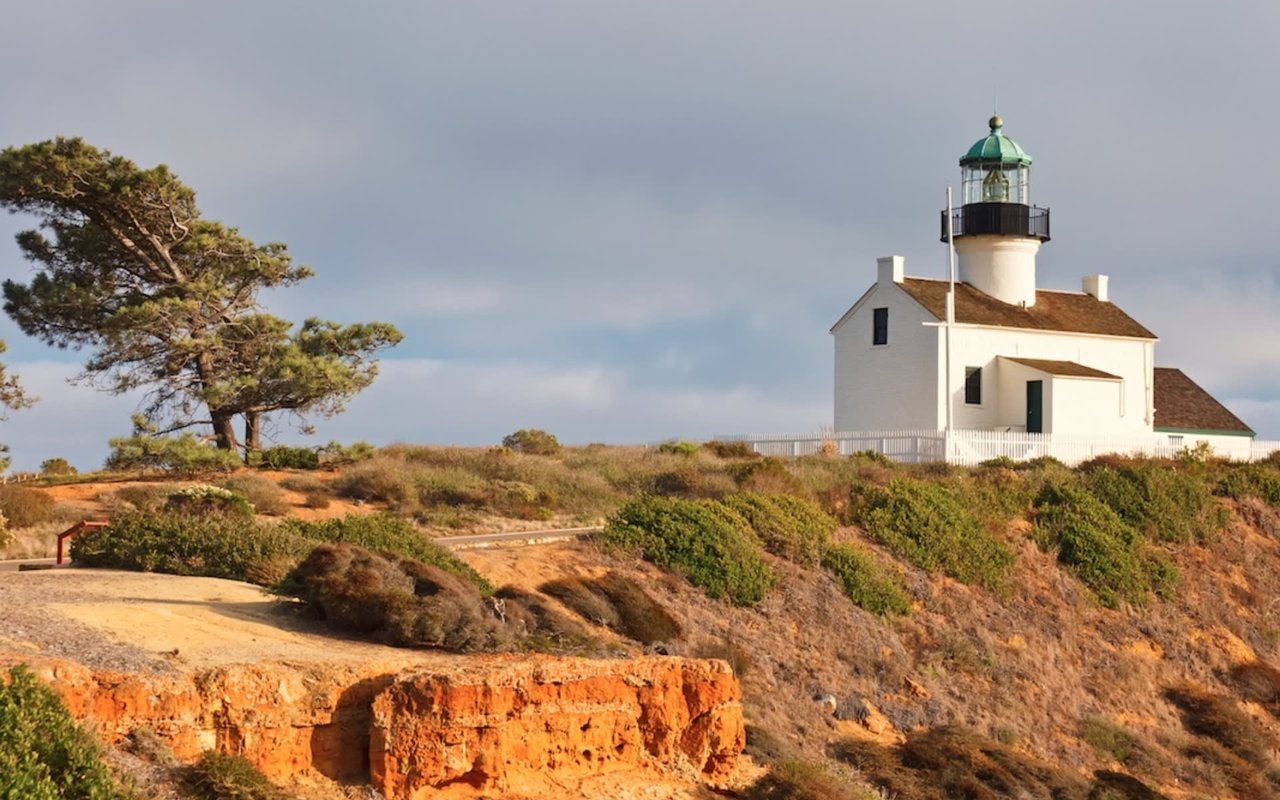
City Council President Joe LaCava has a line he keeps repeating about Point La Jolla, the rocky spit just south of the Cove that San Diego closed to the public for good in 2023: nobody was really using it anyway. "People really shouldn't be walking out there," he told Times of San Diego in August, explaining why that closure sailed through with barely a fight. It's a fair point. Point La Jolla is a slippery sandstone outcropping that draws a few photographers and the occasional tide-pooler. Closing it cost the neighborhood almost nothing.
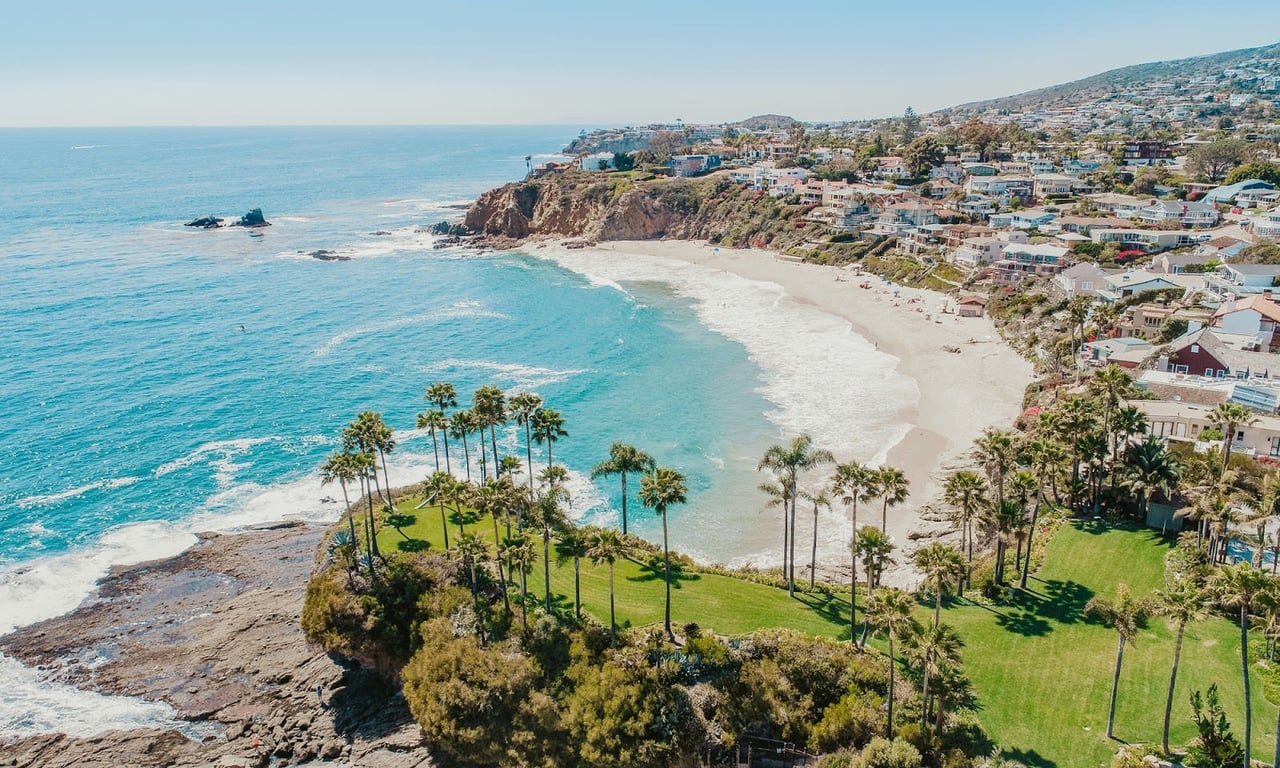
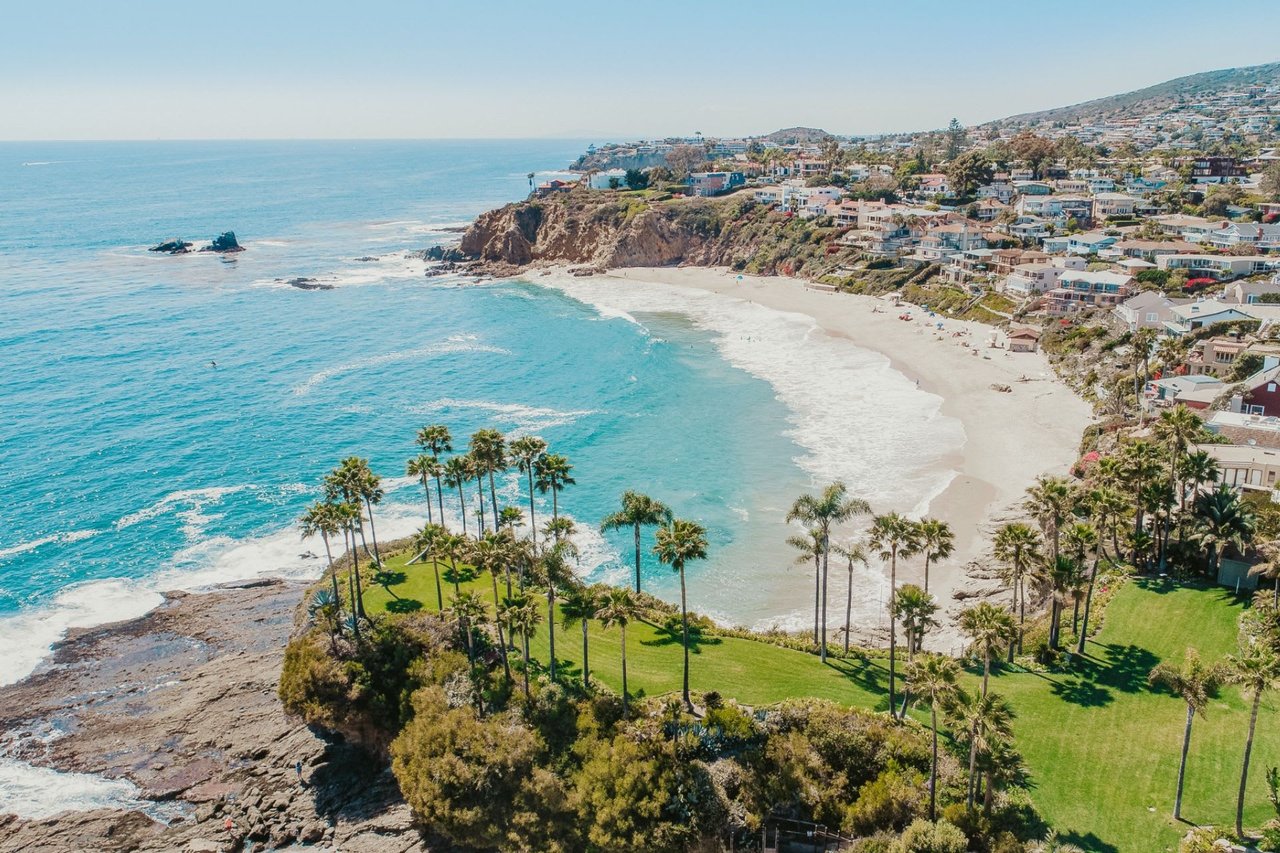
La Jolla Cove is not that. It's the beach Tripadvisor ranked the top in the United States this year, the water where the La Jolla Cove Swim Club logs its laps every morning, the sand where more than three million visitors a year come to watch Garibaldi dart through the kelp and sea lions haul out fifty feet from the boardwalk. It sits inside Ellen Browning Scripps Park, the 5.6-acre lawn AAA calls the most photographed spot in San Diego, home to weddings most weekends and the starting line for the Cove Swim, a rough-water race that began in 1916 and has run annually, with a few exceptions, since 1931. You cannot close the Cove the way you closed Point La Jolla, because the Cove is not a rock nobody visits. It's the commons.
That distinction is the whole story of what happened this summer, and it's why the same advocacy voices who praised the city's sea lion management plan in June were, by late August, voting to ask for restrictions on the very beach they'd just called a success story.
What "Positive Results" Actually Meant in June
Back on June 10, the Sierra Club's Seal Society and San Diego's Parks and Recreation Department stood in front of the California Coastal Commission and reported good news. Andy Field, the department's director, said increased ranger presence, new signage, and outreach to tour bus operators were working. There were 24 new pups that week, five of them in the Cove itself, and the Seal Society's roughly 30 volunteer docents were logging 40 hours a week keeping tourists at a respectful distance. The framing was optimistic: education plus visibility equals coexistence.
Six weeks later, on the night of July 22, an 18-year-old La Jolla resident named Tyler Muehl kicked a sea lion four times near Ellen Browning Scripps Park, including twice near its face, then chased it as it fled. The video went viral. He pleaded guilty in federal court on August 13 to a misdemeanor violation of the Marine Mammal Protection Act, a charge carrying a maximum penalty of a year in custody and a $100,000 fine. Lesser harassment violations, the kind park rangers actually see most weekends, top out closer to $36,500 in civil penalties, if they're ever pursued at all.
That gap between the two numbers is the real story. Because rangers didn't cite Muehl. They couldn't. They documented what they saw and forwarded it to federal investigators, the same limited path every ranger at the Cove is stuck with.
Why the Same Playbook Won't Work Twice
Here's the mechanism nobody explaining "will the Cove close" is naming directly. San Diego's park rangers have no authority to issue citations for sea lion harassment. Under the Marine Mammal Protection Act, that power belongs to NOAA's Office of Law Enforcement, and NOAA has exactly four enforcement officers covering the entire state of California. Rangers can post signs, talk through megaphones, and place traffic cones based on where pups are resting that day. What they cannot do is stop someone from walking past all of it.
That's the difference between what worked at Point La Jolla and what's failing at the Cove. Point La Jolla succeeded because closing it required almost no enforcement at all: install a gate, post a sign, and the problem mostly solves itself since there was nothing drawing people there in the first place. The Cove requires enforcement precisely because people want to be there, in exactly the spot where the sea lions are.
| Point La Jolla | La Jolla Cove | |
|---|---|---|
| Public access | Closed year-round since 2023 | Open, no restrictions |
| Annual visitors | Minimal, few reasons to go | More than 3 million |
| Pup mortality this year | About 6% | About 43% |
| Enforcement tool | Permanent gate | Signage, ranger presence, no citation power |
Emily Piatanesi, a senior policy adviser to Mayor Todd Gloria, told coastal commissioners in mid-August that the city attorney's office is now trying to identify a local or state law that would let lifeguards and rangers actually write tickets, rather than just narrating violations to an agency four officers deep for the whole state. Until that changes, more signs at the Cove will keep producing the same result they produced this summer.
The Number Underneath the Debate
As of mid-August, the city had recorded 56 sea lion births at the Cove since June. Six pups had died there, with two more dying just next door at the closed Point La Jolla. By late August the Seal Society's running estimate put pup mortality at the open Cove around 43 percent this season, against roughly 6 percent at the site the city sealed off entirely. That's actually an improvement over the previous two years, when the Seal Society says mortality at the Cove ran past 50 percent each season. It is still, by a wide margin, the difference between a beach where a pup has a fighting chance and one where it mostly doesn't.
Cypress Hansen, a local naturalist who used to work at the San Diego Natural History Museum, put the stakes in a wider frame at the August 24 meeting: California sea lions have access to roughly 1 percent of the world's coastlines, rookeries make up about 5 percent of that sliver, and marine protected areas cover another 7 percent on top of that. Run the math and you get 0.0035 percent of the planet's coastline available to them as a safe place to breed. She also noted that sea lion fossils found on Coast Boulevard, just north of the Cove, date back roughly 80,000 years. The animals were here first, by a margin that makes "who was here first" a strange argument to even be having.
Not everyone at that meeting agreed on what to do with that math. Penelope Nagel, who swims the Cove daily, argued that closing Point La Jolla already led to a surge in the sea lion population and asked the board to find ways to manage that growth rather than restrict human access further. Eric Fletcher, a member of the Cove Swim Club, said the debate had flattened into two camps, those who see the sea lions as an invasion and those who see them as untouchable, when most people who use the Cove do so without hurting anything at all.
What the August 24 Vote Actually Proposes
Here's the correction worth making, because it's the part getting lost. The La Jolla Parks and Beaches board, a nonprofit founded in 2011 that normally draws a handful of people to its monthly meetings, pulled more than 110 attendees on August 24, enough to fill the room at the Riford library meeting space and spill into the hallway. The board voted to send the city a formal letter asking it to consider restricting Cove access for part of the year. Two of the board's 15 directors, Marie Hunrichs and Ken Hunrichs, voted against it for opposite reasons: she worried it would let the sea lion population keep growing unchecked, he worried it was the first domino toward closing the Cove entirely.
Nobody on that board proposed a Point La Jolla style permanent gate. The model on the table looks more like Children's Pool, the harbor seal site a short walk south on Coast Boulevard, which already closes seasonally during its own pupping window each winter without ever becoming a year-round shutdown. Ann Dynes, the board's president, was blunt about why a formal ask was necessary at all: there's no agency, she said, with the resources or the priority to actually enforce the rules already on the books.
Coastal Commissioner Matt O'Malley has landed in a similar place, telling the Commission on August 14 that he now believes a partial closure is the only realistic path until the city sorts out its enforcement problem. LaCava is still opposed to any Cove restriction, seasonal or otherwise, and wants to keep looking for a way to let both people and wildlife use the same fifty yards of sand.
What Changes at the Cove This Fall, and What Doesn't
Nothing changes automatically. Pupping season, as the city's own management plan defines it, runs from May 15 through September 15, so the current stretch of intensive ranger presence and signage winds down on its own in the next couple of weeks regardless of what any board votes on. The letter that came out of the August 24 meeting is a request, not an ordinance. It still has to move through the city, the Coastal Commission, and whatever legal mechanism Piatanesi's office is chasing down before anything resembling a Children's Pool style seasonal limit could take effect, and that timeline points toward next year's pupping season rather than this one.
What's worth watching if you live here: whether the city attorney actually finds a way to give rangers citation authority before next May, because that's the fix that would matter more than another round of signage. If enforcement stays stuck at "document and forward to four officers statewide," expect this same argument to resurface next summer with a different viral video attached to it.
If you're weighing what a beach controversy like this means for property near the water, or you're simply trying to keep up with the neighborhood you already call home, the Kaiser Team tracks La Jolla's daily life as closely as its market. Reach out anytime you want a local read on what's actually happening here, not just what the headlines say.